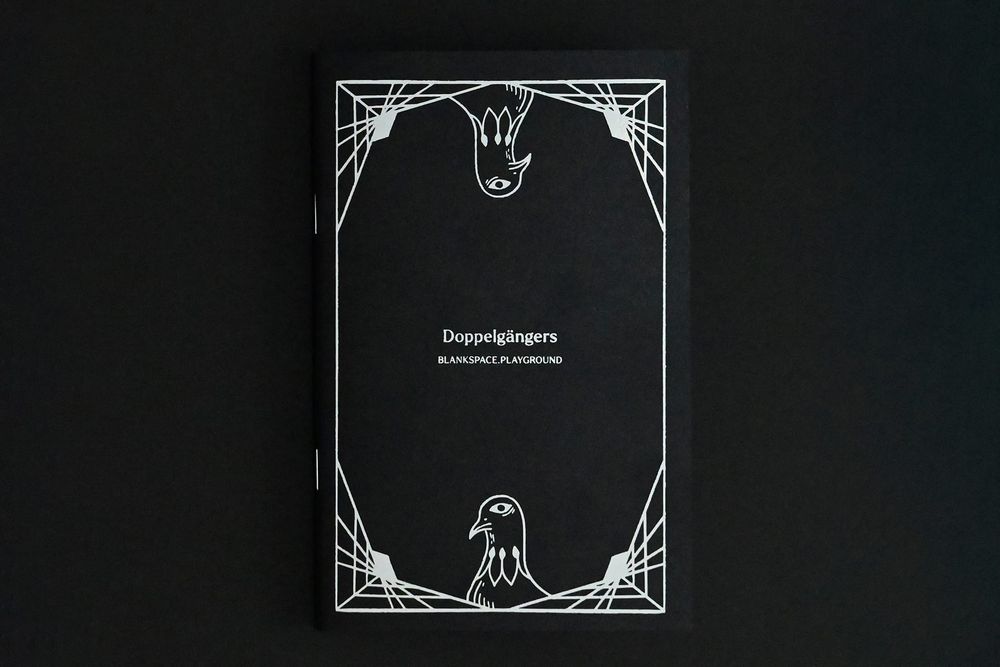
How does one describe the feeling of being in places and meeting people that feel familiar yet they are totally unrelated and different? How does one visualize the predicament of being in the similar undesirable situation over and over again, whether by chance or by unconscious choice? How to visualize the formation of the unhealthy coping mechanism? The zine Doppelgängers is an attempt to explore the expressions of the questions with photo diptychs and illustration.
Formation of the narrative of the first zine
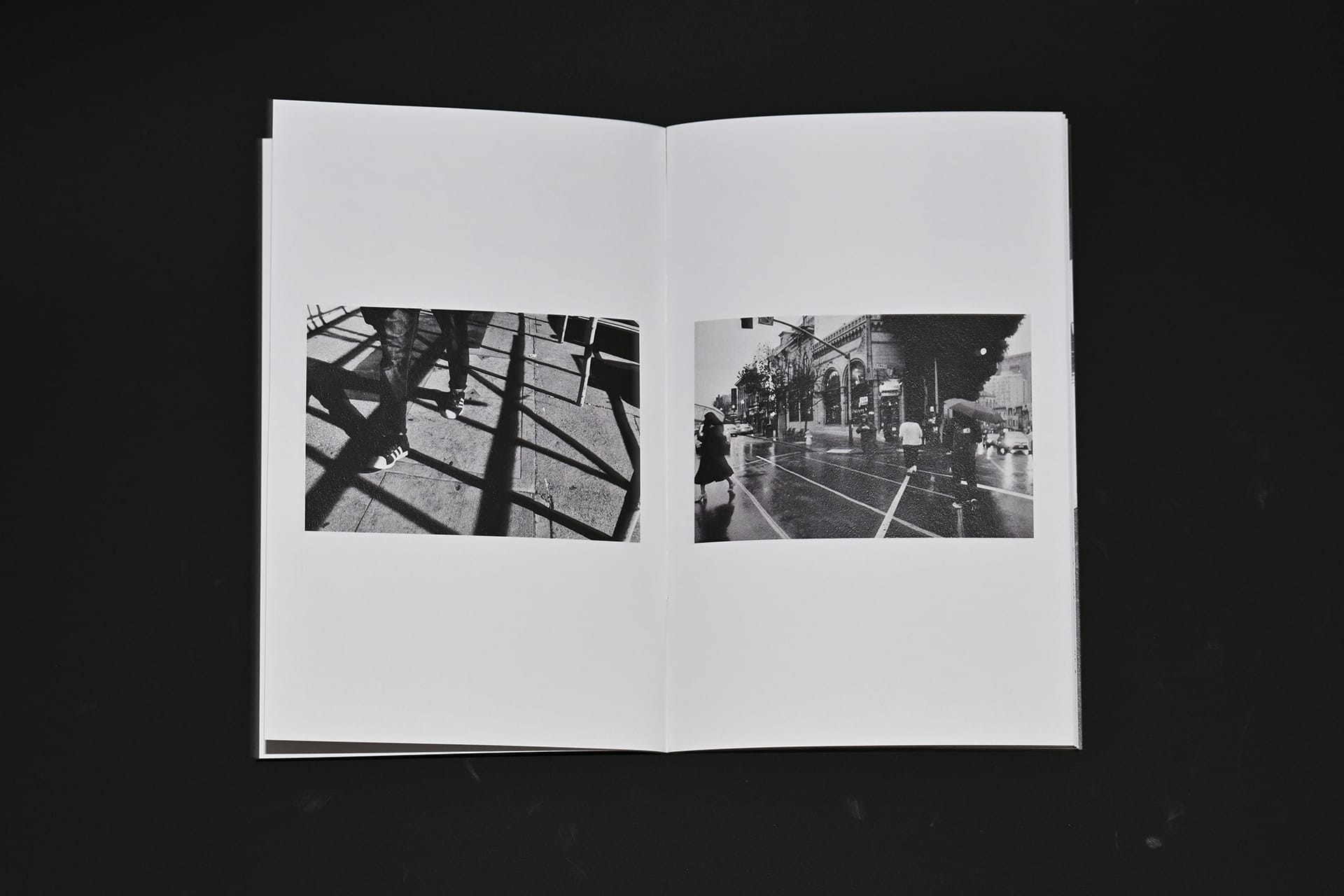
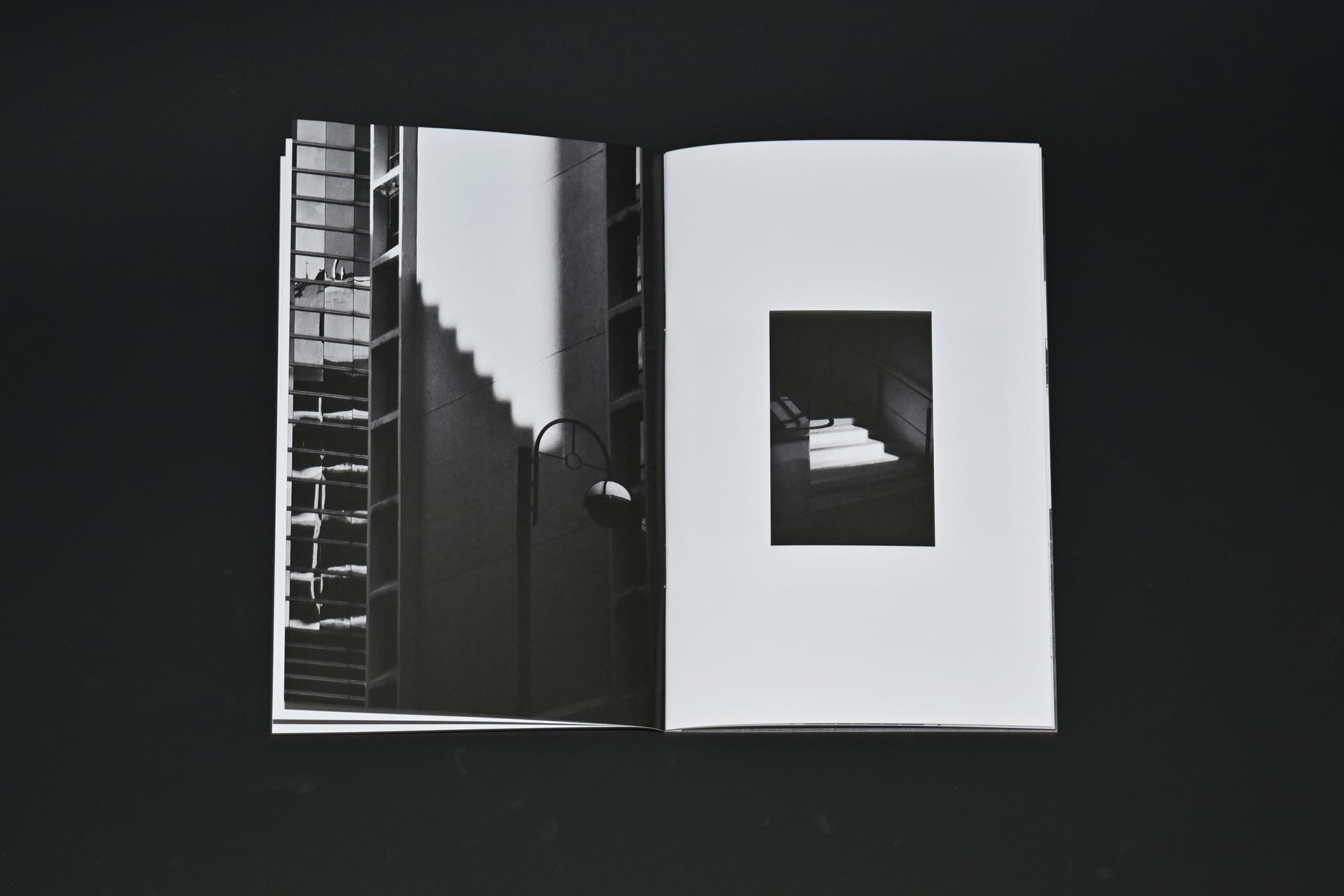
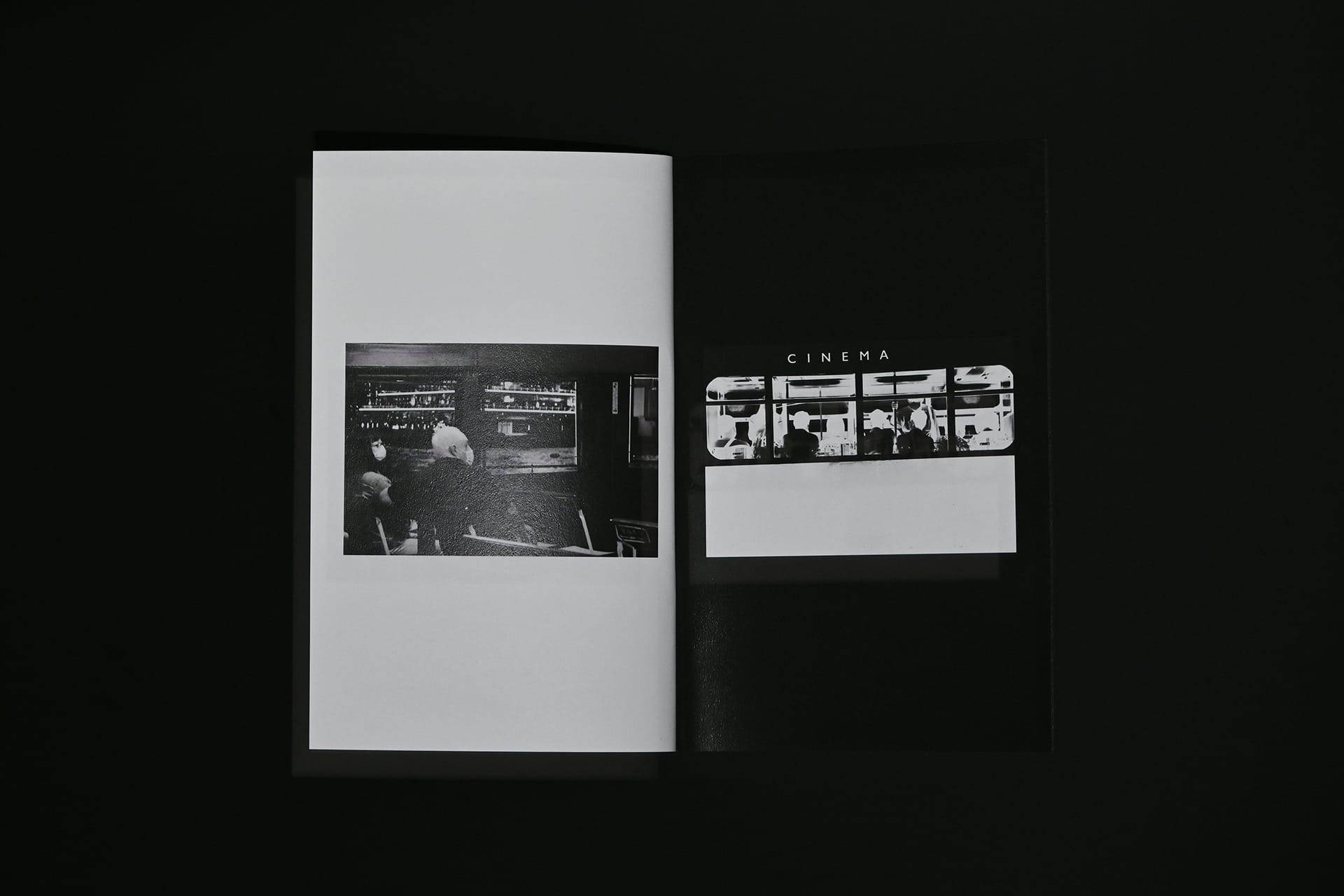
Inspired by an editing / sequencing session of photo zine-making, it was discovered the photo archives include pairs of images that share similar compositions, but taken in different period of time and place. They mainly included clean lines and shadows, geometric compositions, close up of building facades, silhouettes of urban dwellers etc. The images have their own potential, but inner conflict arose as I came across Matt Stuart’s Think Like a Street Photographer: ‘...beware of editing in a way that patronizes the viewer by stating the obvious’. The progress went stagnant until the word doppelgänger (a german word that means ‘someone or something that’s similar to another person / thing’) appeared, which became the metaphor of the photos.
The word doppelgänger instead of words like déjà vu or echo is used for the following reasons: 1) the latter ones are more commonly used, describe something less tangible and sound more ‘dreamy’, whereas doppelgänger is about an existent tangible entity and of more unsettling nature; 2) it echoes with the validity of existence of endless loop of negative incidents – that it’s real, no matter how one’s mind tricks them into thinking that it’s an illusion or how much other people say ‘you get it wrong’ or ‘think too much’.
Completing visual narrative with various media
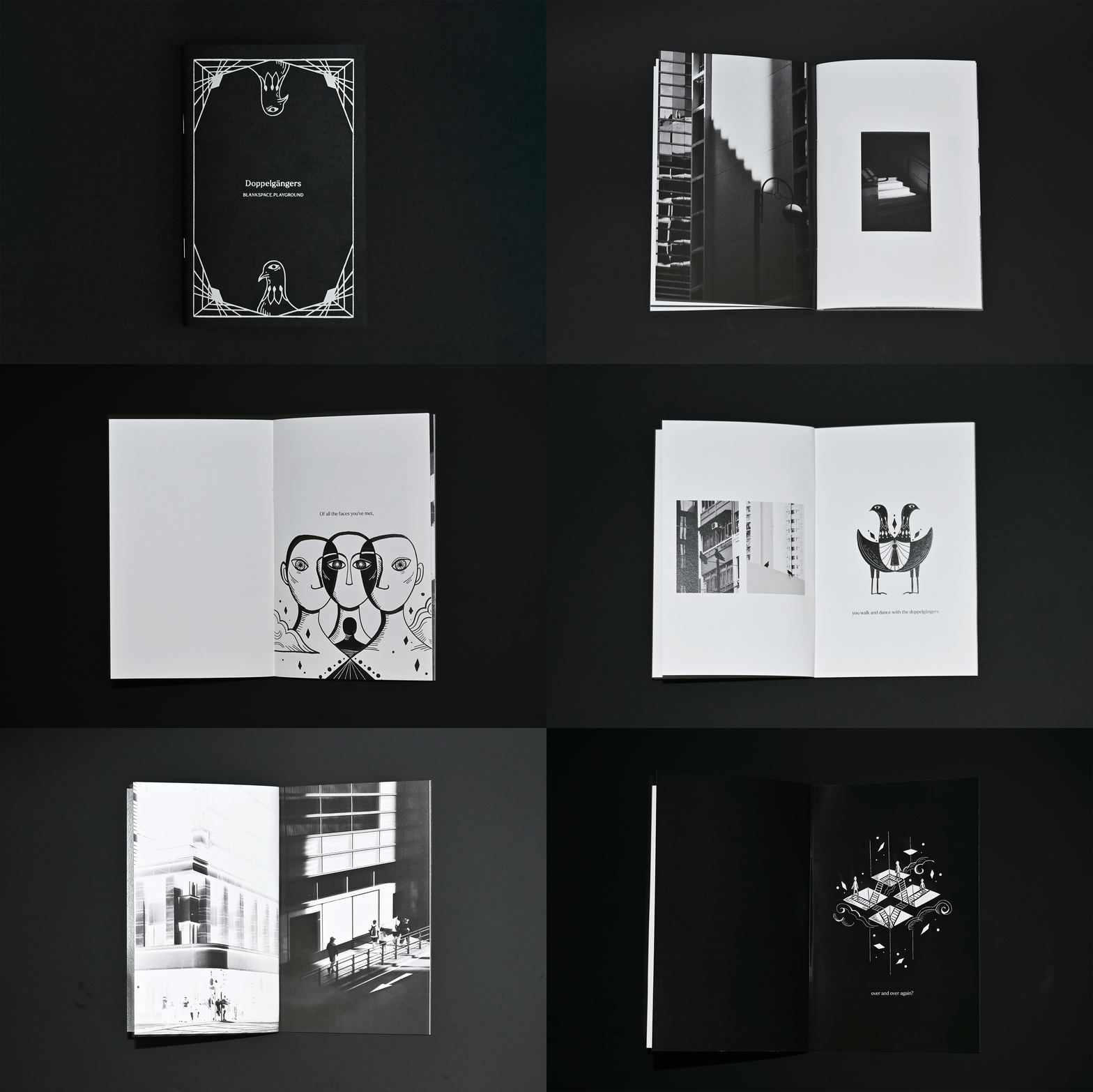
The theme is here and the main visual elements (the diptychs) are ready. The next step is to connect everything into a zine. First, the whole zine and all the images are in black and white, which make readers focus on the compositions and repetition instead of the colors. Second, surreal illustrations inspired by the elements / compositions of photos are added. For instance, the details of first pair of photos (two images depicting people walking the ground with straight line-like shadows and painted lines) resemble grid lines and checkers. The images lead to the idea of creating a chessboard that is made of threads tied on fingers, representing the uncertainty of encounters in life that sometimes are believed to be controlled by fate / a higher being. Another key visual is a pair of dancing birds with same appearances, a direct representation of the doppelgängers and the entanglement. Inspiration and meanings of the visuals as below:
- The chessboard of fate: a pair of hands playing cat’s cradle, which forms a chessboard that no one can escape. Inspired by painted grid lines of roads.
- The wheel of coincidences: a wheel that rotates and decides where one goes based on probability. It watches how the person moves. Inspired by bike wheels.
- The path that watches: an identical-looking triplets that forms a mountain range and a person is trapped in the road. Inspired by silhouettes in the dark
- The doppelgänger birds: a pair of identical-looking dancing birds, where a person is trapped in their movements. Inspired by birds found in urban environments.
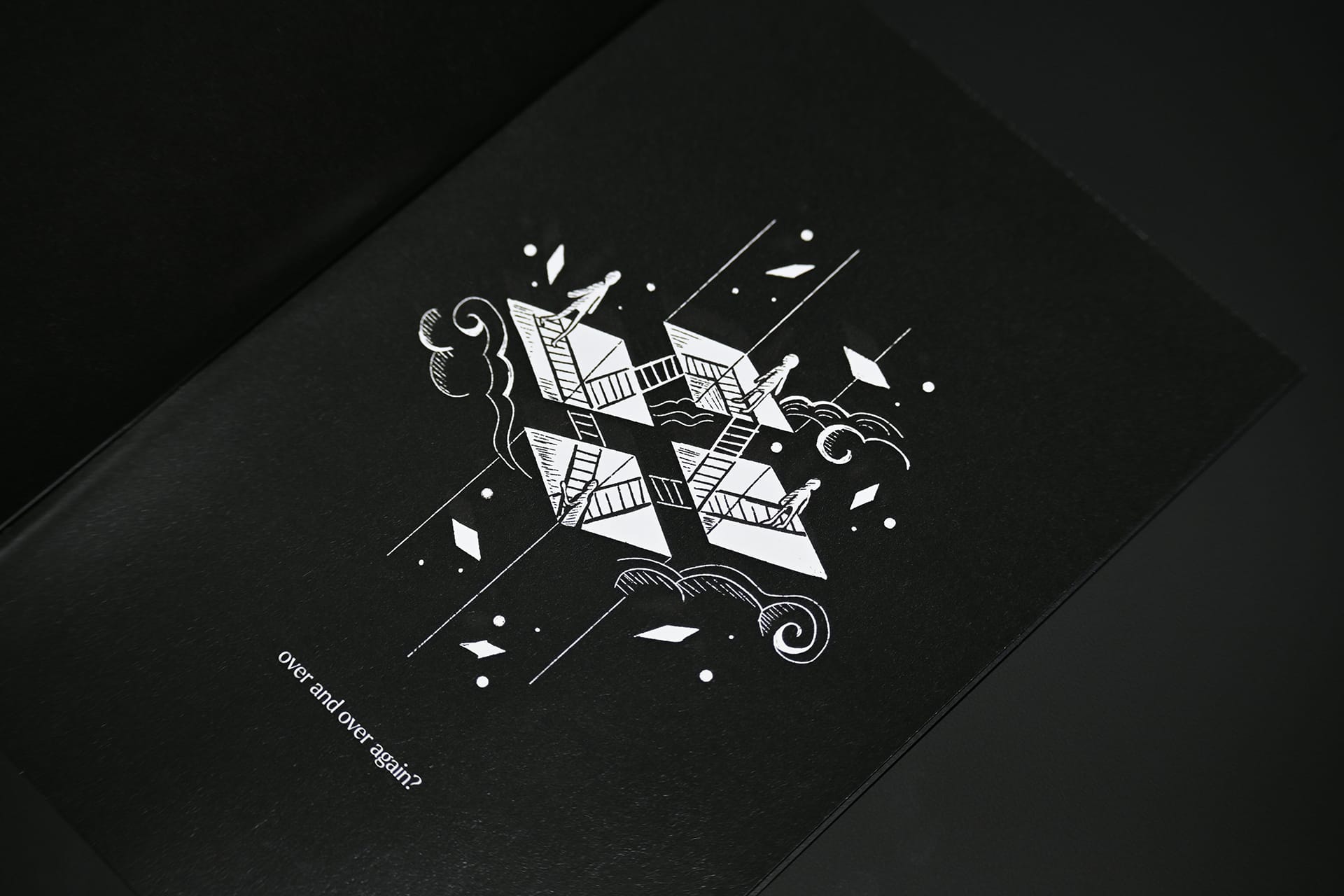
- the ladders of traps: an infinite loop of ladders that people climb up and down in the grids of a chessboard but they’re unable to escape. Inspired by the fascination towards M.C. Escher’s artworks.
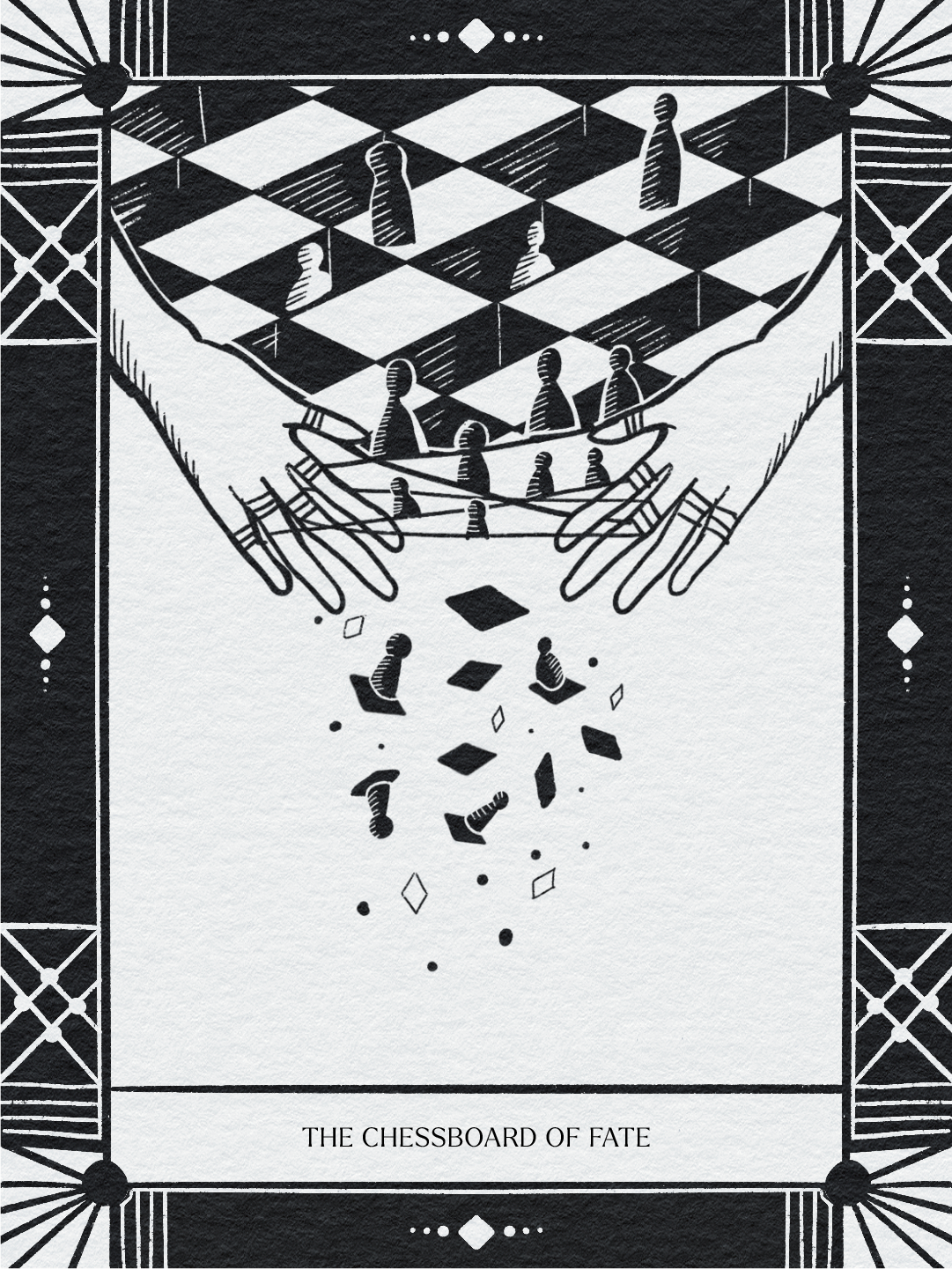
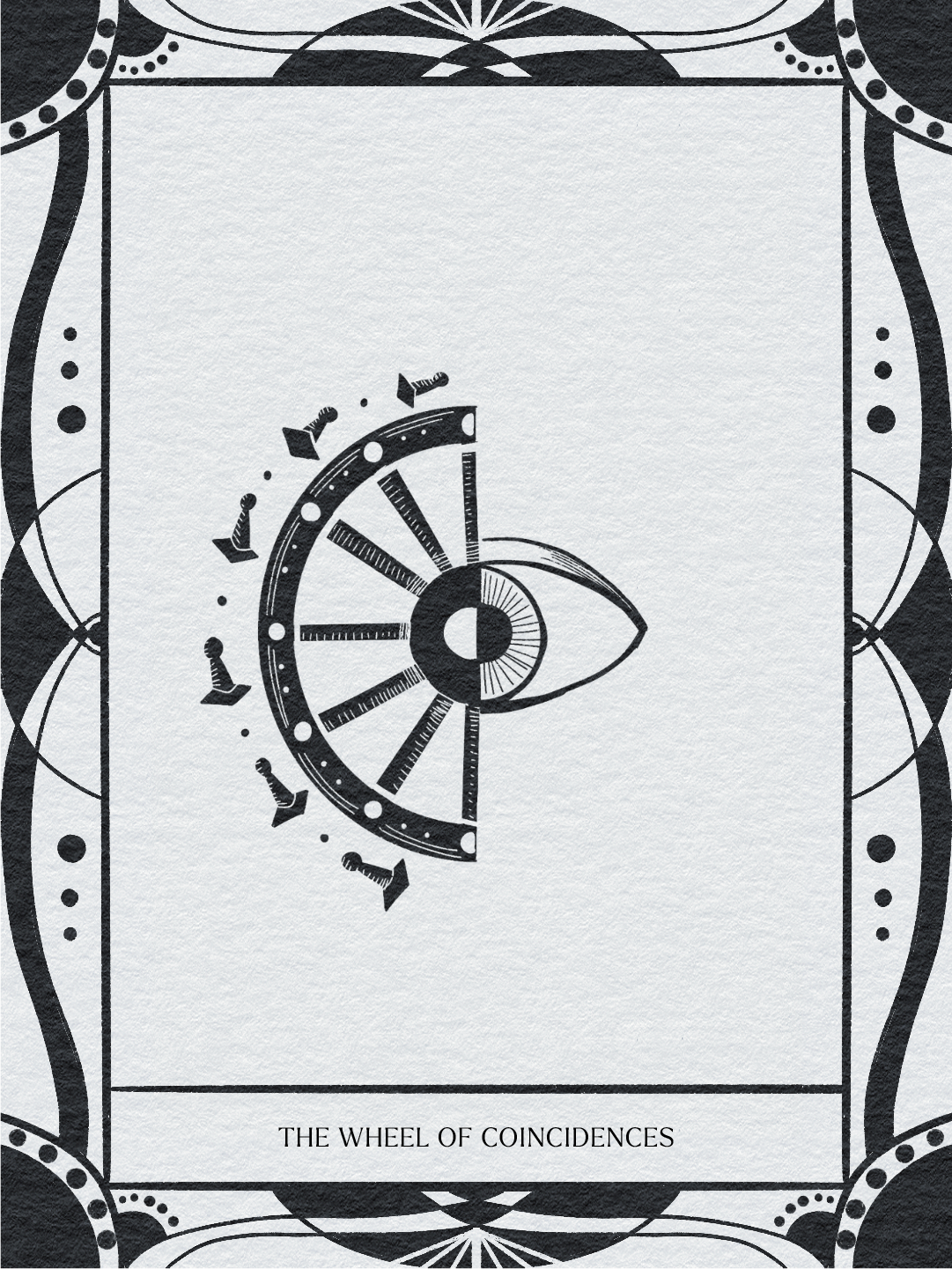
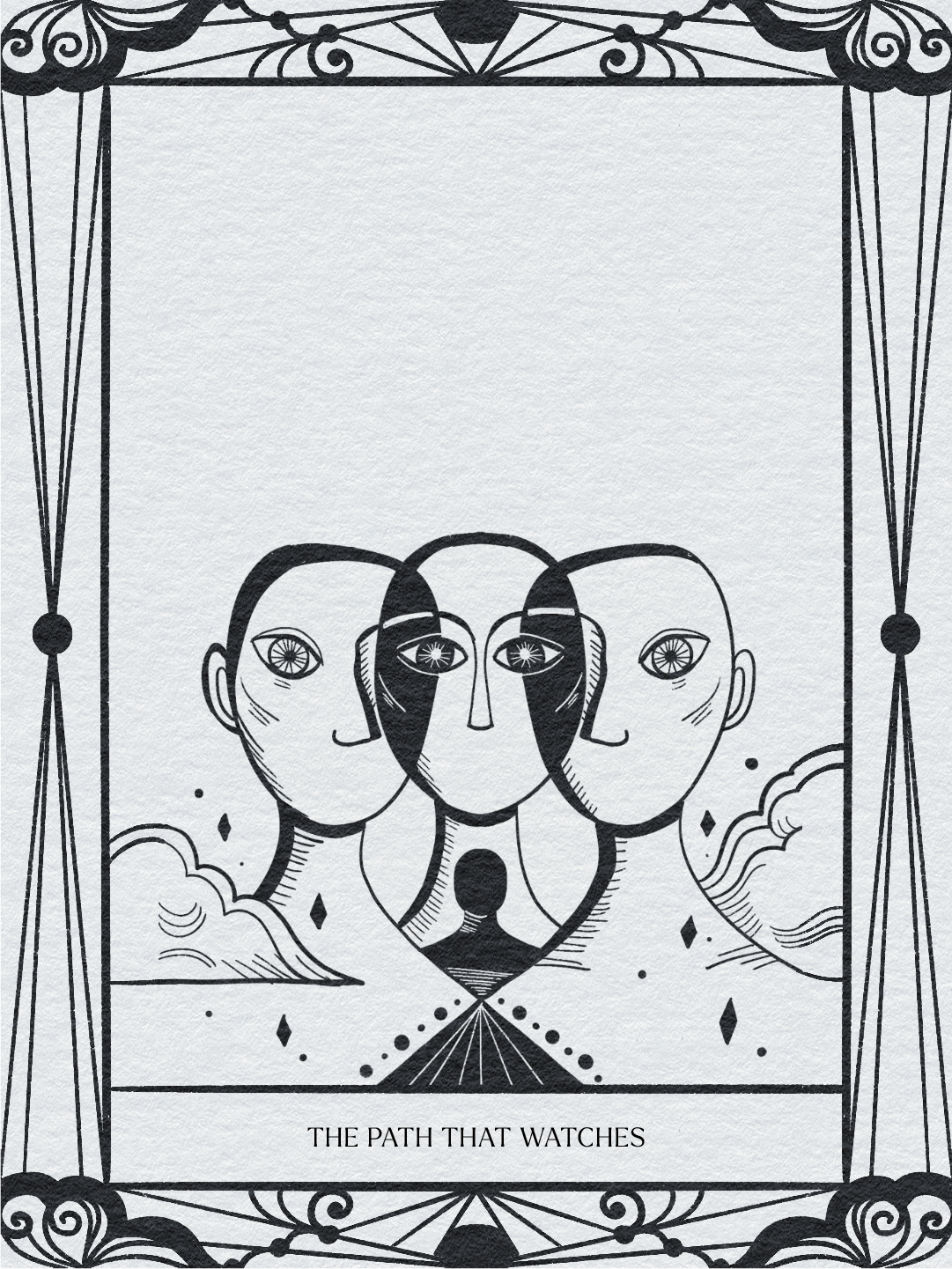
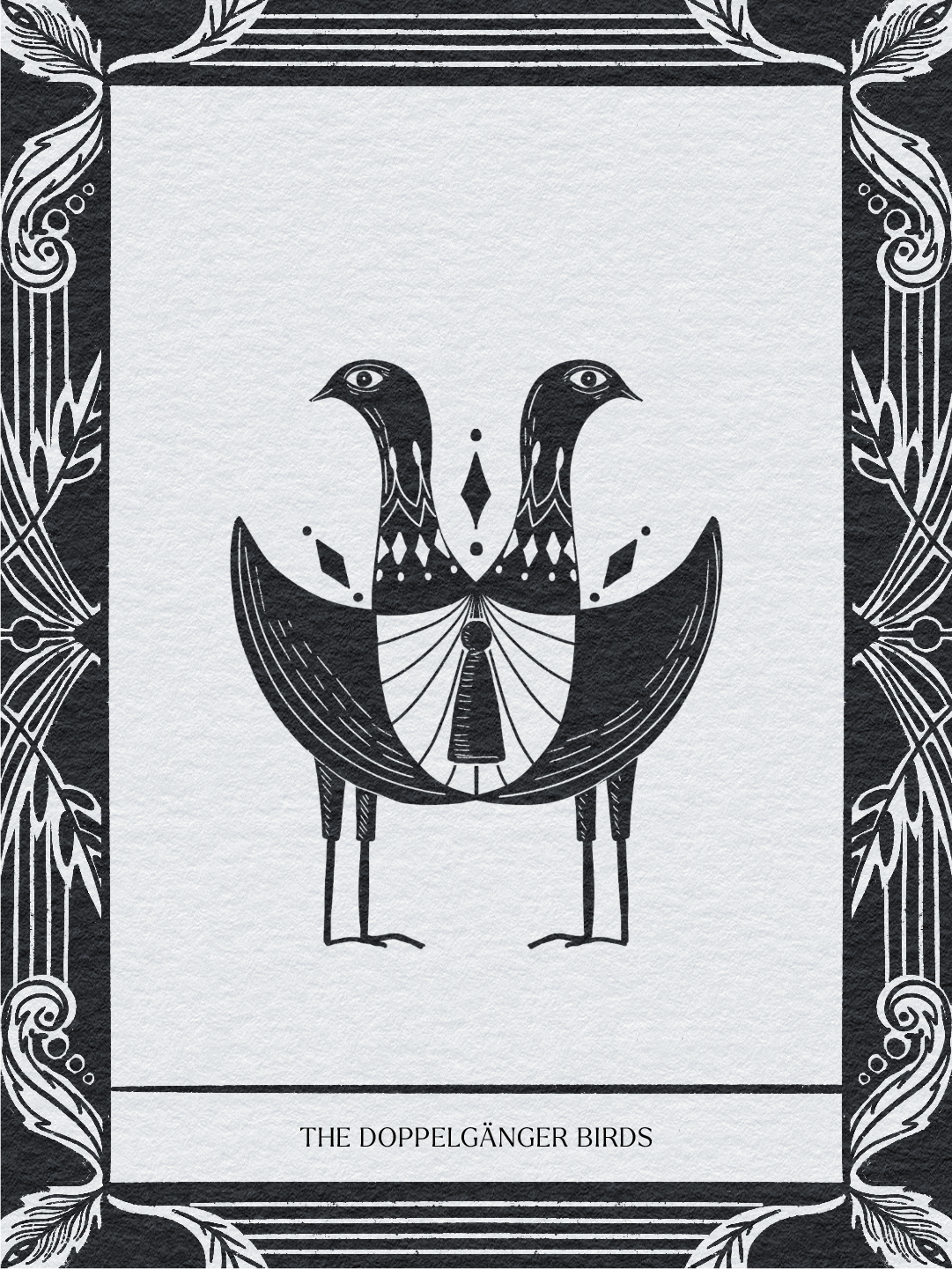
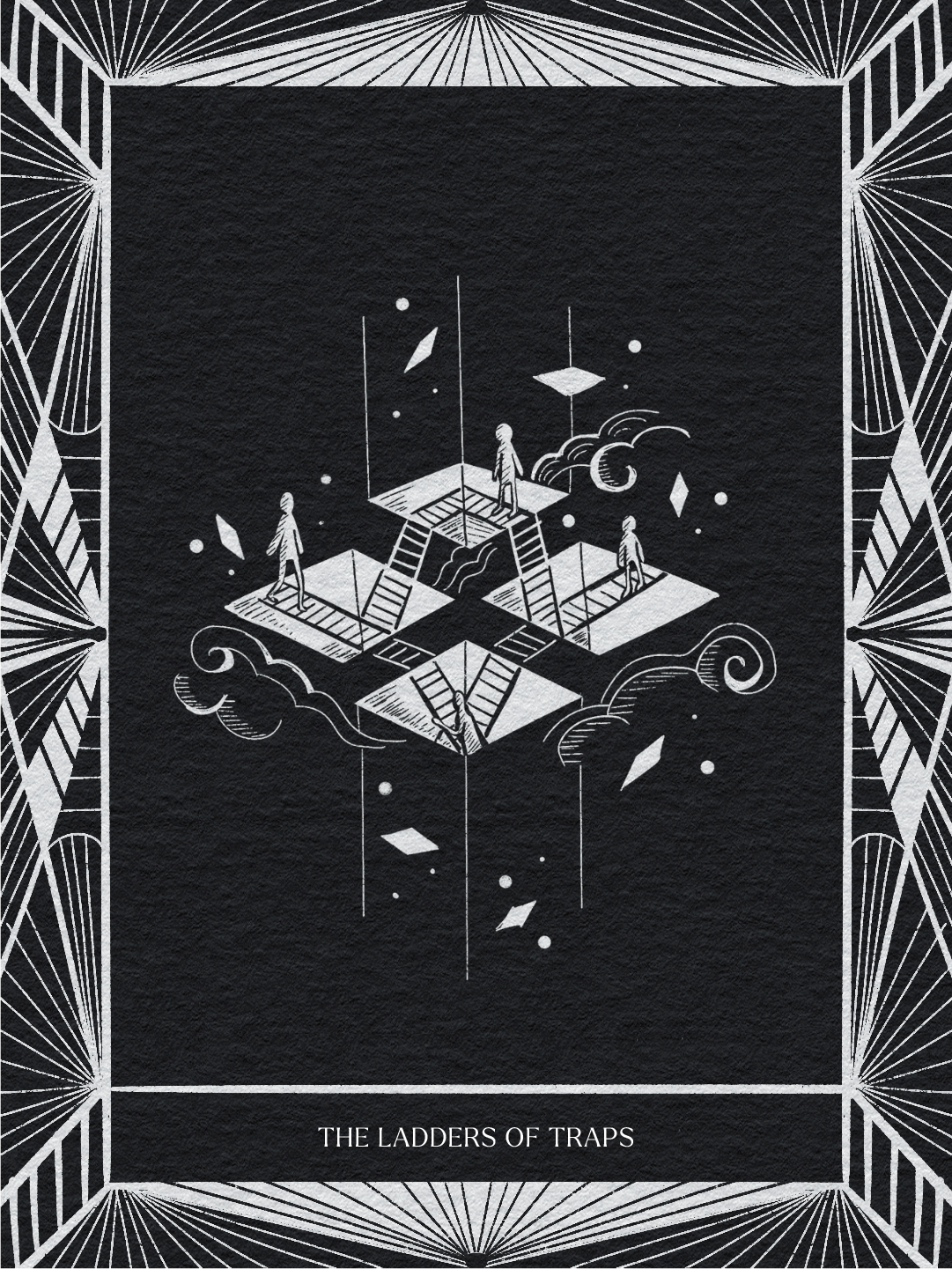
illustrations of the zine doppelgängers. Borders and text are added retrospectively only for portfolio display.
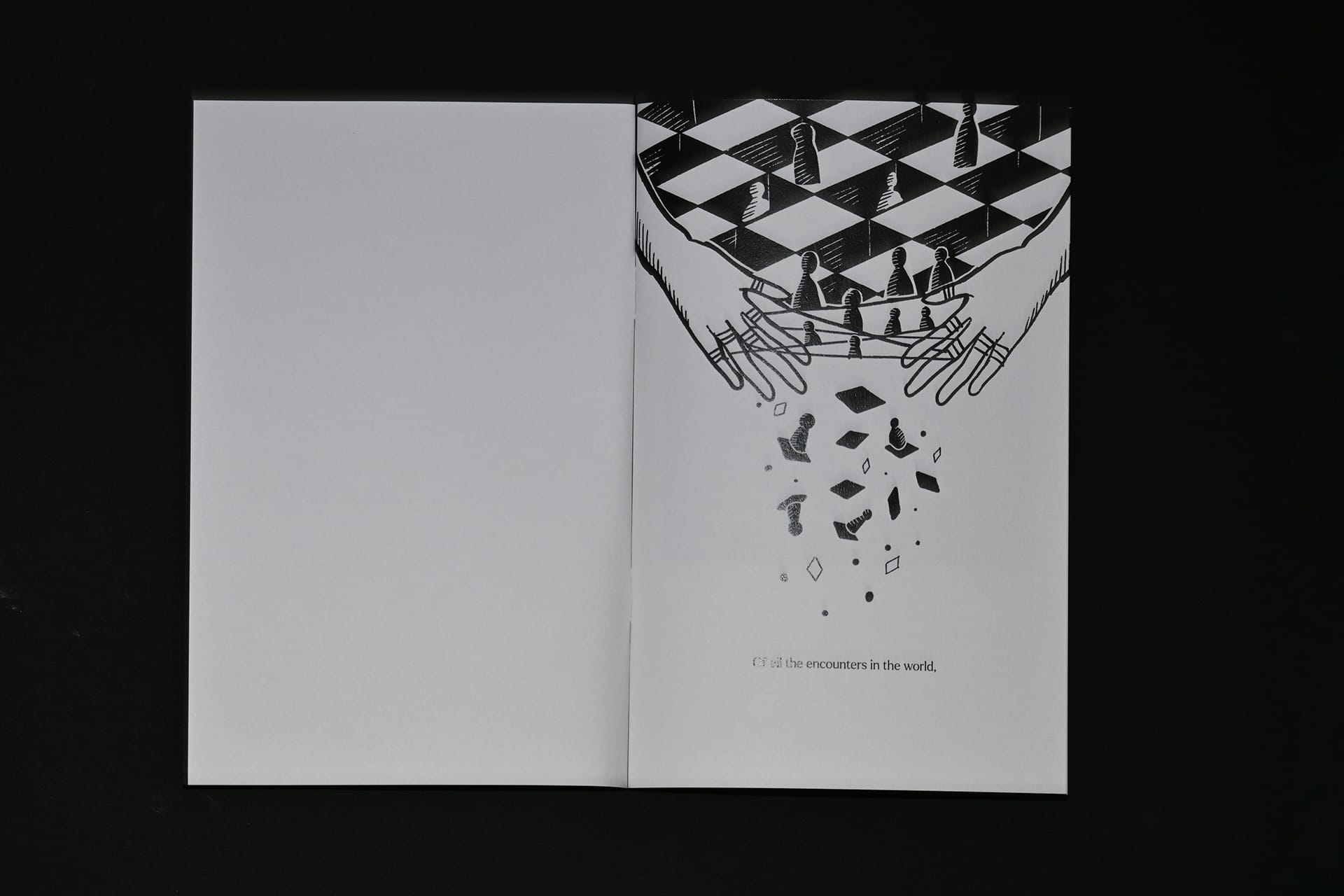
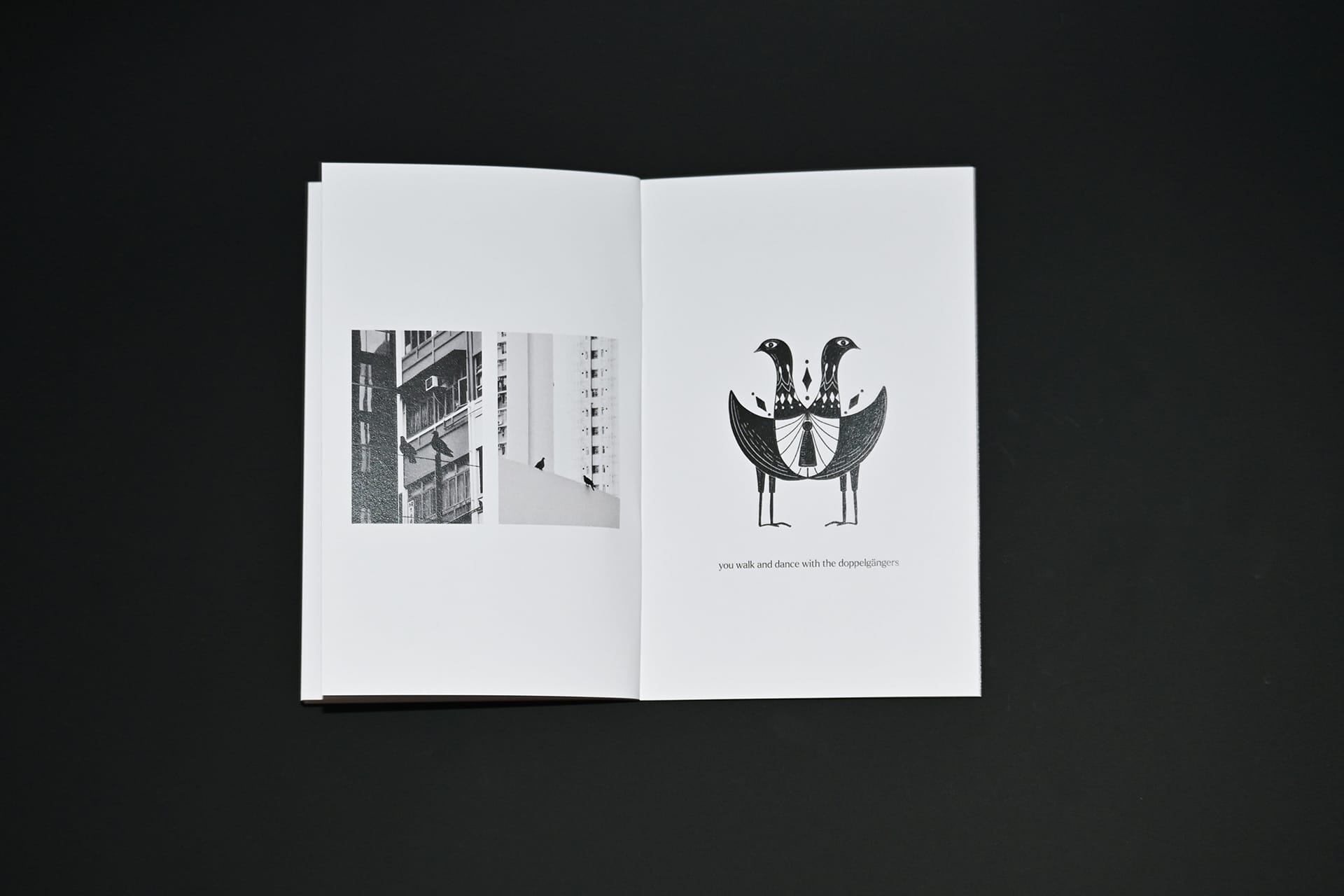
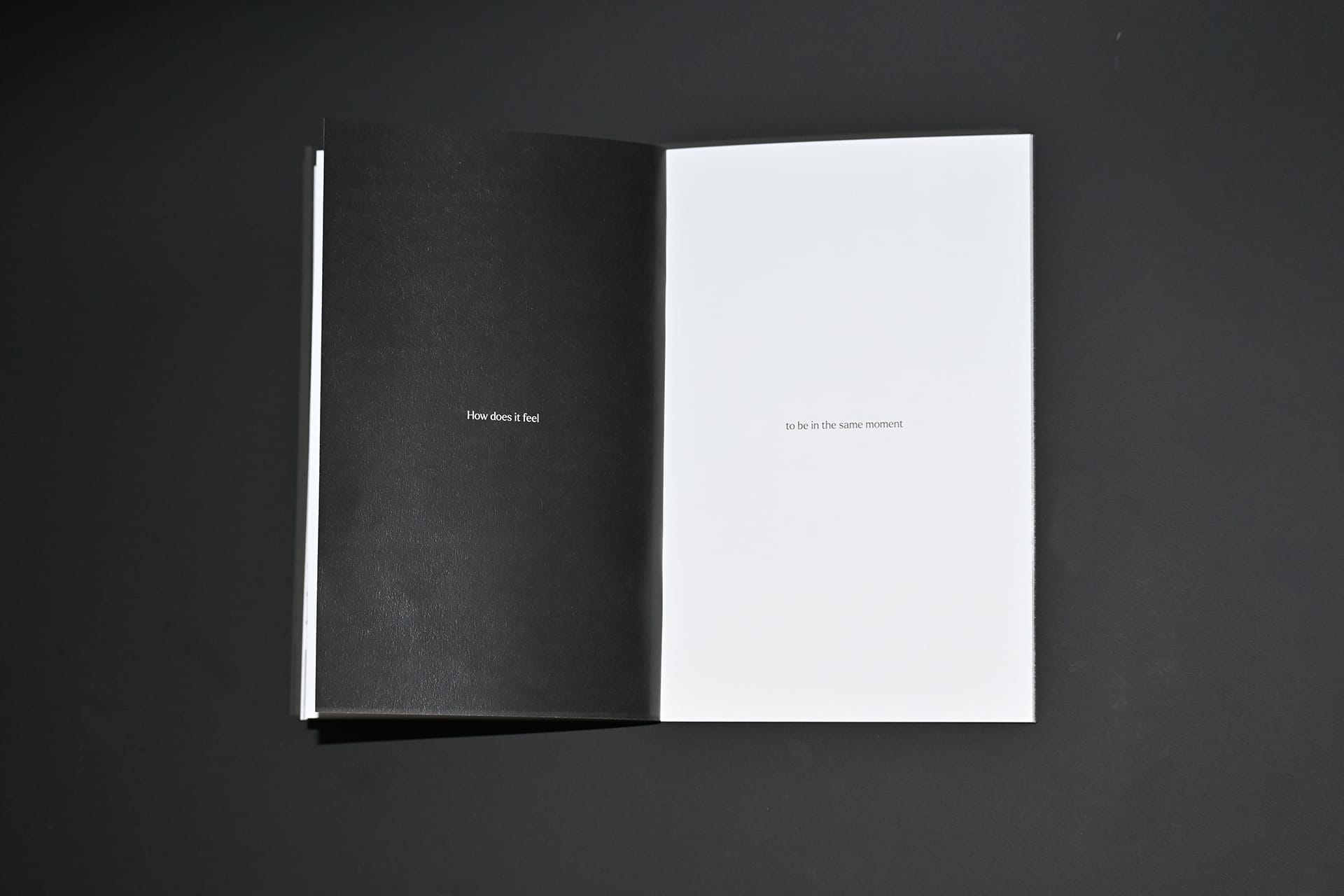
As for typography and text, minimalism is the key. Three sentences, presented in clean serif, become the main message – ‘of all the encounters in the world, you’re drawn to the coincidences. Of all the faces you’ve met, you walk and dance with the doppelgängers. How does it feel to be in the same moment over and over again?’ It describes the situation without any judgement, which is to let readers face their own feelings and situation, a crucial step to break away from the personal stagnation.
Doppelgängers is a direct response on a seemingly uncontrollable destiny – only when one recognizes the patterns in life with brutal honesty, does the healing / epiphany starts.